The 14:52 to Nowhere in Particular: Britain's Railway Stations as Portrait Sets
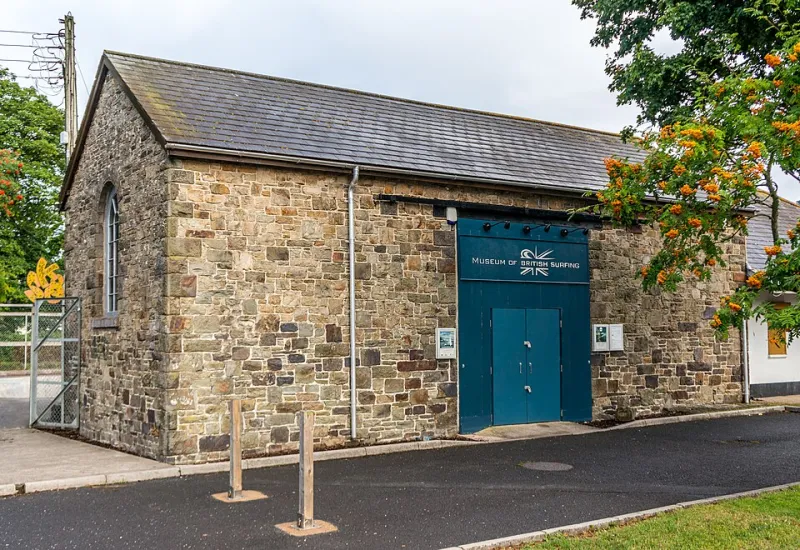
Photo: Dietmar Rabich, CC BY-SA 4.0, via Wikimedia Commons
Some photographers keep a list of favourite walls. I keep a list of favourite platforms — and it's longer than it probably should be for a man who owns more than one reflector.
Stations get a poor reputation. They're busy, they're policed, they smell faintly of diesel and pasties, and the light is often doing something unhelpful with a 1970s ceiling panel. And yet given a straight choice between a manicured garden and a provincial terminus with a draughty footbridge, I'll take the footbridge every time — assuming nobody is sprinting for a connection behind me.
This isn't a nostalgia piece about steam engines. It's a working note on a location type I keep returning to for editorial portraits, and how to pull usable pictures out of Britain's railway estate without making life difficult for the people who actually have to run a railway.
A place that already has a story
A garden says nothing about anybody. A platform implies a direction. That's the whole appeal. Waiting, leaving, coming back, being early, being late, being somewhere between two versions of your life — all of it is baked into the architecture before your subject has even taken their coat off.
You also get layers for free: the departure board flicking over, a tannoy announcement cutting across, strangers moving through the frame, a train pulling out and dragging the light with it. In a garden you have to manufacture all of that. In a station it's already happening and all you have to do is stand in the right place.
Three types of station, three registers
Not every station suits every brief, so it helps to think in categories.
The grand terminus. Think St Pancras, Glasgow Central, Newcastle Central, Manchester Victoria with its tiled map and that enormous arched roof. These are theatrical. Good for editorial work with a bit of scale, good for full-length frames, good for a subject who can hold a pose in a wide space. The trade-off is footfall and a longer permission conversation.
The suburban interchange. Concrete, tiling, sodium light, a footbridge with a draught running through it. This is where you go for something drier and cooler — a more modern, less romantic register. Underpasses are gold for graphic, flat, colour-blocked portraits.
The rural halt. A bench, a fence, a field, a sign with a name that sounds made up. Wemyss Bay with its curving glass canopy, Knaresborough and its viaduct, Hellifield's long low platforms. These are quiet, human-scale and forgiving — and crucially, often empty for long stretches of the day.
Light on a platform is a strange and useful thing
Canopies do something no studio modifier can replicate: they cut the top off the light and bounce the rest back up off pale stone or painted steel, which is a very flattering, very soft source. Overcast days, which we have in abundant supply, make this even better.
What I watch for is colour temperature. You'll often have cool daylight coming in from the open end of the platform and something distinctly warmer coming from the interior lighting, and the mix can be lovely or ghastly depending on the ratio. Set white balance for the skin and let the background go where it wants. Mixed colour is part of the atmosphere, not a fault to be corrected.
One practical note: platform edges are for trains. Keep your subject well back from the yellow line, and don't shoot a full-length frame with a train coming in behind them unless you want the shot to look like a public information film.
Passenger flow is your metronome
Timing is everything, and not just for the trains. Peak hours are hopeless — you'll be photographing a crowd, not a person. Mid-morning and early afternoon are usually the quietest windows at commuter stations; Sunday mornings can be almost eerily still outside the big cities, and an engineering closure can hand you an entire platform.
It's worth checking the timetable before you book a client. Not to plan the shot, but to know when a wave of people is about to arrive. The departure board is the closest thing you'll get to a shot clock.
Permissions: do this properly
This is the bit people skip and then get cross about. Commercial photography at a station is not the same as taking a photo of your mate on a day out.
Network Rail manages the major stations and has a formal commercial filming and photography process, with lead times that can run to weeks rather than days, and fees in some cases. Smaller stations fall under the train operating companies, who each have their own arrangements. London Underground and the wider TfL estate is a separate world again. Turn up, ask at the information desk, be pleasant, and if the answer is 'you need to speak to head office', take that as the answer.
Beyond the paperwork: no tripods or lighting stands without permission, keep bags clear of the platform edge and walkways, don't photograph staff or passengers without asking, and don't block a gateline. Wear something neutral, carry a ticket, and behave like a passenger who happens to have a camera. It gets you a long way.
What goes in the bag
Less than you think. One body, a 35mm and an 85mm, a small reflector, spare battery, cloth. Stations are not the place for a lighting bag and a three-person crew. The more portable you are, the more places you can go and the less interesting you look to security.
What to tell your subject beforehand
Send a short message the day before. Wear something with no big logos, bring a coat, expect to stand about, bring a valid ticket if we're going through a barrier, and don't wear shoes you can't walk in. Set the expectation that this will feel more like a wander than a shoot — because the best station portraits nearly always come from the twenty minutes when nobody was performing.
And if the 14:52 is delayed? Good. That's twelve more minutes of everybody standing around being honest, which is usually when the picture turns up.