The Hour Nobody Photographs: Defending the Space Between the Vows and the First Dance
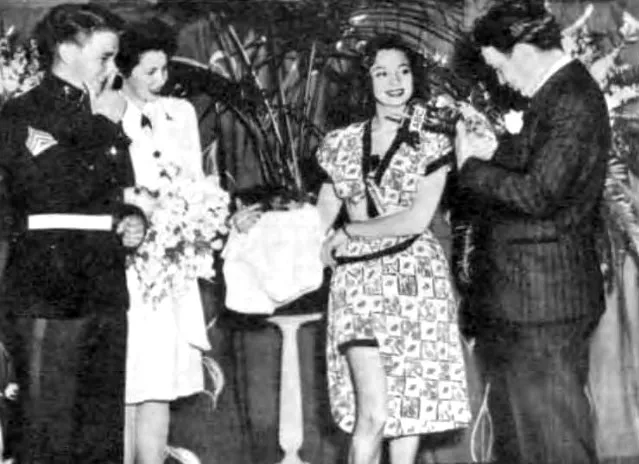
Photo: Radio Album magazine, published by Dell Publications; page 3 of PDF identifies publisher and year of copyright., Public domain, via Wikimedia Commons
There is a stretch of a wedding day that almost nobody plans for, and it is reliably the best part of the photographs.
It sits between the last of the confetti and the first of the canapés. The vows are done. The pressure has come off. Everyone has had a drink, or is about to. Nobody is performing any more, because the performance ended when the register was signed. For about ninety minutes, a room full of people who were being photographed become a room full of people who have forgotten about it — and that is when you get the pictures you actually want on the wall in ten years' time.
The problem is that this is also the exact stretch of the day that gets eaten alive by logistics, group shots and somebody saying 'we've just got to pop back for the—'.
The gap is the story, not the gap between stories
Most wedding timelines treat the in-between hour as a transport problem to be solved. Guests move from A to B. The couple are whisked off for photographs. A receiving line forms. Group shots get ticked off the list in the car park while the light dies.
I understand why. Group shots are the one thing families genuinely ask for, and there's a real fear of missing somebody. But the consequence is that the most relaxed, most truthful hour of the day is spent lining up cousins in alphabetical order.
My argument is simple: cut the list, protect the hour. Six to eight group frames — the ones that will actually be printed — arranged in advance with names attached, shot briskly in one location, ideally before the ceremony if your venue allows it. Then let the rest of that time be walking, talking and doing nothing in particular.
What actually happens in that hour
It's rarely dramatic, which is the point. The bride's mum gets her coat on. Somebody's uncle finds the only bench in the village. The couple walk twenty yards ahead of everybody else and say nothing at all. A bridesmaid carries the shoes. Someone goes to find a cashpoint. There is a pub with a slightly sticky table and a round that takes four goes to get right.
None of that is photogenic in the way a floral arch is photogenic. All of it is what the day actually felt like.
I've shot the alternative many times: a couple driven directly from ceremony to reception, arriving twelve minutes later, straight into a receiving line, straight into speeches being called early, and by nine o'clock they look like people who've done a day's work. The photographs are fine. They're just not theirs.
A loose framework that works
I don't hand couples a rigid schedule, but I do suggest a shape. Roughly ninety minutes, spent like this:
Five minutes of nothing. Straight after the ceremony, before anyone gets to them. No phones, no well-wishers, just the two of them in a corridor or a doorway or the lee of the church wall. This is the only bit of the day nobody else gets to see.
The walk, not the car. If it's under a mile, walk it. Walking is the single most flattering thing a couple can do in front of a camera, and it gives guests something to follow rather than something to wait for.
One pub stop, twenty minutes. Not a scheduled drinks reception — an actual pub, preferably one that looks mildly surprised to see you. A round, a packet of crisps, a table by the window, a bit of a debrief. This is where the laughter photographs live.
Fifteen minutes of just the two of you. Wandering, not posing. I'll be somewhere behind you with a longer lens and no instructions.
Five minutes in a quiet room. Wherever the venue will give you. A kitchen, a stairwell, an empty bar. Shoes off, sit down, breathe. Couples always say this was the only time they spoke properly all day.
The arrival. Back out to the guests while everything's still warm. Not an hour later.
If your venue is on a ring road
Plenty of venues sit next to a dual carriageway with nothing but a hotel and a roundabout for company. Fine. The framework flexes. The pub becomes the hotel bar, or a village green, or a park bench, or — genuinely, and I mean this — the forecourt of a petrol station with a decent canopy and the two of you in whatever you're wearing. I've done a chip shop stop before now, and the resulting photographs were better than anything taken in the grounds.
The location is not the point. The uninterrupted-ness is.
For photographers: build it into the contract
If you believe this, say so up front — in the booking conversation, in the timeline document, and in the brief you send to the venue's events coordinator. Ask the toastmaster or the best man to hold the room for twenty minutes. Give the couple a five-minute warning before you need them. And build the gap into your coverage hours so nobody feels they're paying for dead time that isn't producing photographs.
Also: tell them to leave their phones somewhere else. A quiet hour with a phone in it isn't a quiet hour; it's a second, smaller ceremony attended by nobody.
For couples: the only real ask
Ask for the hour. Not a photoshoot — the hour. Ask for six group photographs and no more. Ask the person with the clipboard to leave you alone between the vows and the welcome. And accept that it might rain, and that a walk in the rain with an umbrella is still a better use of the time than being lined up in a car park.
The ceremony is the point of the day. The party is the reward. But the hour in the middle is where you find out what it all felt like — and it's the only part nobody remembers to protect.