Forget the Lawn: Finding Wedding Portrait Character on UK High Streets
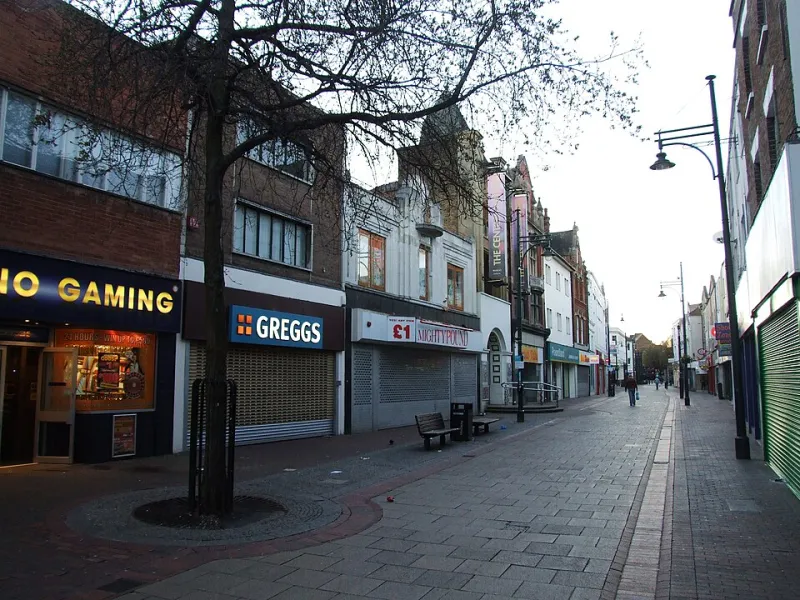
Photo: Chris Whippet , CC BY-SA 2.0, via Wikimedia Commons
I've photographed couples on enough manicured lawns to know the appeal. The light is even, the background is tidy, and nobody has to worry about a wheelie bin photobombing the vows. But over the past few years — and especially through a run of shoots in northern towns and coastal cities in 2024 and 2025 — I've found myself steering couples and editorial subjects away from the estate garden and towards the ordinary street. Not because gardens are bad. Because the street is usually more interesting.
In 2026, I'm doing it more deliberately.
The problem with a perfect lawn
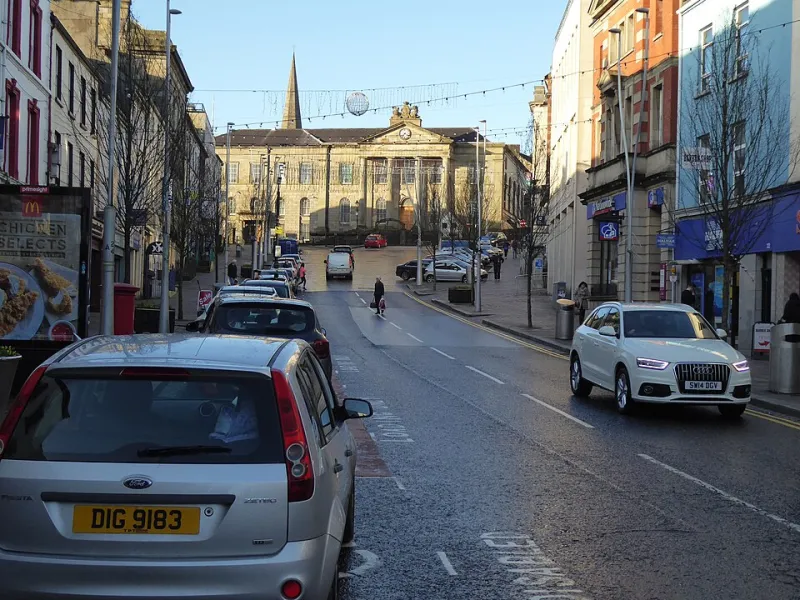
Stately gardens are designed to look controlled. That's the point. But control can flatten a picture. If every backdrop is a clipped hedge and a gravel path, the couple has to carry the whole story. There's nothing wrong with that, but it doesn't leave much room for surprise. An ordinary high street gives you layers: red brick, shop signs, bus shelters, cracked pavements, a chippy with its lights on, a terrace of back-to-backs, a corner shop with a hand-painted sign. These are the things that say 'this is here' rather than 'this is nowhere in particular'.
What northern towns and coastal cities give you
Some of my favourite recent frames have come from places that don't appear on wedding venue brochures. A bus stop in Halifax with the couple huddled under a clear umbrella. A chippy queue in Scarborough, the couple laughing as someone walked past with a tray of chips. A terraced street in Stockport where the light bounced off wet tarmac and the whole scene looked like a film still. A seafront shelter in Brighton, wind in the veil, a seagull eyeing the bouquet. These places aren't glamorous in the conventional sense. They're specific. And specificity is what makes a photograph memorable.
Framing the everyday
Shooting on a street is not just a matter of pointing the camera at a shop. I look for repeating shapes — chimney pots, awnings, railings, road markings — and use them to frame the couple. I'll use a longer lens to compress the background, or a wide lens to include the street and let the couple sit in the landscape. I'll often shoot at eye level or slightly below to make the architecture feel taller. And I'll wait. A street changes every few seconds: a bus goes past, a pedestrian crosses, the light moves. Patience is the whole game.
Permissions, pavements and people
Public streets are generally fair game for photography in the UK, but that doesn't mean you can do whatever you like. I avoid blocking pavements, never stand in the road without a spotter, and check whether a location is private land — shopping centres, station concourses and some squares have their own rules. If I want to shoot inside a shop or use a business as a backdrop, I ask first. Most independent shopkeepers are lovely about it if you explain what you're doing and offer to send them a picture. For crowd management, I choose times carefully: early Sunday morning, a quiet weekday, or a residential street rather than a busy high street at 3pm on a Saturday. When people do walk through, I mostly let them. Sometimes the frame is better for it.
The honesty argument
There's an honesty to photographing a couple on a street where people actually live. It says this is part of your life, or this is where you're from, or this is the place you'll walk past on a normal Tuesday. Stately gardens can be beautiful, but they can also feel like a set. The street has friction: weather, traffic, other people, a bit of mess. That friction often makes people relax. They stop performing for the camera and start reacting to the world around them. That's when the good pictures happen.
When to choose the garden
I'm not arguing for banning the estate lawn. If a couple has a deep connection to a venue, or the garden is genuinely extraordinary, use it. The point is to stop treating the high street as a fallback. For editorial clients, the same logic applies: a subject on a real street can feel more alive than a subject on a perfect bench. The location should serve the story, not the other way round.
The UK has some of the most characterful ordinary streets in the world. They're not postcard-perfect, and that's exactly why they work. If you're planning a wedding or an editorial shoot in 2026, I'd encourage you to look beyond the lawn. Stand at a bus stop. Walk past the corner shop. See what happens. The pictures might surprise you.