The Half-Lit Wing: Portrait Notes from Behind an Amateur Stage
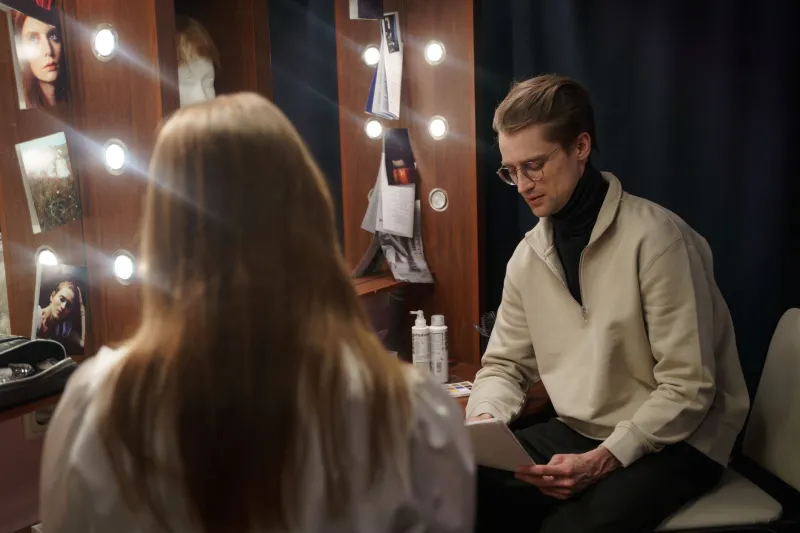
There is a particular smell to an amateur theatre on a Tuesday night: warm dust, hairspray, old timber and the faint electrical hum of a dimmer rack. I love it. Not because I want to photograph the show — I don't, particularly — but because the building around the show is one of the richest portrait sets in Britain. Dressing rooms with bulbs around mirrors. A prop store that looks like a car boot sale curated by a Victorian ghost. A wing so narrow you can touch both walls, lit by one working practical and a sliver of stage spill.
This is not production photography. It is portrait photography that happens to take place behind a community stage. And if you approach it properly, an amateur theatre will give you something a hired studio cannot: texture, history and people who are already halfway into a character.
Scout the building before you bring a camera
Amateur theatres are usually run by volunteers, so the first conversation is with the venue, not the cast. Ask for the stage manager or the society secretary. Explain that you want portraits, not rehearsal coverage, and that you will work around their schedule. The best time is often a Sunday afternoon or a quiet weeknight before technical rehearsals begin. Panto season and spring musicals are busy; a dark week is gold.
Walk the building with a notebook. Look at the dressing rooms first: mirrors, bulbs, cramped corners, chairs that have been there since 1978. Then the wings — mind the sightlines, because a photographer standing in the wrong place is visible to the audience and a safety problem. Prop stores are usually a mess, which is useful, but check what you can move and what is actually fragile. Stairwells and corridors are often better than the stage itself: less pressure, more atmosphere.
Ask about fire exits, alarm tests and anything that must stay clear. Never block a route that a cast member might need in a quick change. If you move a chair, put it back. If you unplug a practical lamp, tell someone. The venue is doing you a favour; the photographs should not leave a trace.
Work with the light that is already there
Amateur stage lighting is not designed for portraits. It is designed to make a pantomime cow visible from the back row. That is part of the appeal. A hard fresnel wash, a gel that turns skin slightly green, a single practical bulb over a dressing-room mirror — these are visual ingredients, not problems to be flattened out.
My default is to use what exists and add as little as possible. A small LED panel bounced into a ceiling or wall can lift a face without killing the mood. A fast prime lens and a sensible ISO are more useful than a giant softbox in a room the size of a cupboard. If the stage wash is heavily coloured, expose for the face and let the background go where it wants. If a dressing-room bulb is tungsten and the corridor is fluorescent, either embrace the mixed colour or pick one side of the room and shoot into it.
Do not touch the dimmer desk unless you are invited to. Ever. Stage lighting is a safety and rehearsal tool, not a photo accessory. If you need a lamp adjusted, ask the person who knows the rig. And keep flash in your bag during rehearsals — even a small speedlight can be distracting and, in some venues, against the terms of your access.
Direct the person, not the pose
Amateur actors are often brilliant sitters because they are used to taking direction, but they are not models. They may freeze when you say 'just act natural'. Give them a task instead. Ask them to walk to a mark, check a prop, read a line from a script, adjust a costume piece, wait for an entrance cue. The portrait happens in the pause between the action and the photograph.
Use costume and props sparingly. A full panto costume can be wonderful, but it can also swallow the person. A single glove, a folded programme, a mug from the green room or a prop letter is often enough. Let the space do the storytelling: the peeling paint, the rack of coats, the handwritten signs saying 'Quiet please, rehearsal'.
Be clear about consent. Not everyone wants to be photographed out of character, and young performers need a chaperone and parental permission. Keep the atmosphere light. If someone is uncomfortable, move on. A good backstage portrait depends on trust more than technique.
Borrow the venue without getting in the way
The etiquette is simple: be early, be quiet, be useful, and leave no mess. Confirm your access in writing. Bring your own bags and keep them out of walkways. Do not photograph in changing areas without explicit permission. Do not post identifiable images of minors or anyone who has not agreed. Credit the venue and the society when the images go out. A set of prints for the green room is a small gesture that buys a lot of goodwill.
Amateur theatres are community buildings, and they are usually skint. If you can, offer a few portraits for their programme or website. It costs you an edit and it makes the relationship feel like a collaboration rather than a raid.
The result is not glossy, and that is the point. A half-lit wing, a dusty prop table and a volunteer in a costume they have clearly altered three times — that is a portrait of Britain's amateur stage as it actually is. You just have to stand in the right corner and wait for the curtain call.