Between the Bean Rows: Shooting Allotment Portraits in the UK
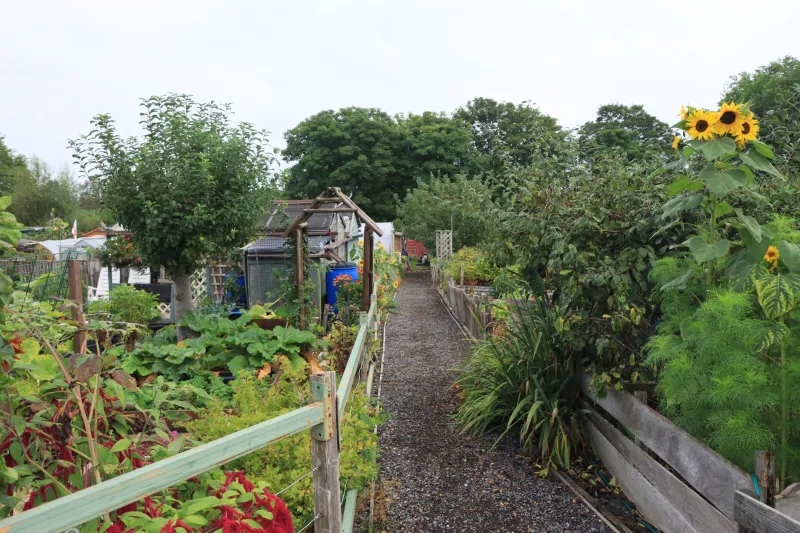
There is a moment on a good allotment site, usually about twenty minutes after you arrive, when the place stops looking like a collection of sheds and starts looking like a set. The light catches a row of bean canes. A watering can sits where someone put it down. A rhubarb leaf the size of a dinner plate throws a shadow across a path. For portrait work, that is the moment worth waiting for.
Allotments are not manicured venues and that is precisely the point. They are working spaces, community spaces and, on the right morning, quietly cinematic ones. For editorial portraits and relaxed wedding couple sessions, they offer something a formal garden rarely does: evidence of ordinary life, handled with care.
Why allotments work as portrait sets
A good portrait needs layers. An allotment gives you layers without asking for a stylist. There are foregrounds of leaves and netting, mid-grounds of sheds and compost bins, and backgrounds of greenhouses, fruit cages and neighbouring plots. Paths create natural leading lines. Fences and gates give you frames. Seedlings in trays give you colour and repetition.
The textures are excellent too. Weathered timber, corrugated metal, brick paths, plastic labels, string, twine and the soft grey of old shed doors all photograph beautifully in British light. Unlike a hotel lawn, an allotment does not look embarrassed by a bit of mud. That makes it easier for people to relax.
Read the site before you shoot
Arrive early and walk the site without your camera out. Look for the plots that are clearly loved but not precious. A shed with a wonky door and a line of sweet peas is more useful than a perfect show garden. Note where the light falls at different times: open ground brightens quickly, while shed-lined paths stay shaded. Check for awkward background details such as wheelie bins, bright plastic toys or a neighbour's washing line. You can often solve these by shifting two metres to the left.
Also read the mood. Some sites are chatty and communal; others are quiet and private. Do not assume every plot-holder wants a photographer wandering past. A brief hello at the gate goes a long way.
Permission, plots and the etiquette of the gate
Allotment sites are usually managed by a local council, a parish group or an allotment association. Before a shoot, contact the site secretary or association chair. Explain what you are doing, who is involved and when you would like to visit. Ask whether there are plots that should be avoided and whether any plot-holder is happy to be included as background or as a willing extra.
On the day, keep to paths unless invited onto a plot. Do not move tools, pick produce or tidy a shed. If a plot-holder is present, ask before photographing them or their patch. A simple approach works: introduce yourself, say you are photographing a couple or a portrait client, and ask if they mind you using the path outside their plot. Most people are generous when asked properly. Offer to send a copy of any image that includes them or their plot.
If you are working with a couple, brief them on the same etiquette. Allotments are not playgrounds. Gates should be closed, dogs kept on leads unless the site says otherwise, and nothing should be picked without permission.
Seasonal light and the allotment calendar
Allotments change character month to month, which makes them useful across the year. In late spring, seedlings and blossom give you fresh colour and soft backgrounds. Early summer brings tall bean rows, pea netting and long evenings. Late summer is the richest period for texture: full beds, cut flowers, courgettes, tomatoes and the first signs of tiredness in the leaves. Autumn gives you seed heads, spent stalks and low golden light. Winter is stripped back and graphic, with bare paths, shed silhouettes and frost.
In the UK, the best light is often early morning or the last two hours before sunset. Overcast days are not a problem; they suit the green, damp character of a site. Avoid harsh midday sun in high summer unless you want strong shadows and a more graphic look. In November 2026, with the days short and the light low, an allotment can feel wonderfully quiet and atmospheric, provided you plan around the mud.
Sheds, compost and the props you do not move
Sheds are the obvious backdrop, but do not just park people against the door. Use the corner, the window, the step, the gap between two sheds or the path leading towards one. A shed gives you a place for hands, a place to lean and a reason for people to be close together.
Compost heaps are less obvious but useful. They add depth and a working-garden feel, especially when photographed softly in the background. Bean rows are excellent for framing: put your subject between two rows and shoot through the leaves. Rhubarb is a gift. Those huge leaves and red stems create scale and drama, and they work particularly well for editorial portraits with a slightly surreal edge.
The rule is simple: use what is there, but leave it where it is. Do not rearrange a plot to look more photogenic. The authenticity is the point.
Posing among the rows
Allotment portraits work best when people have something to do. Ask them to walk a path, inspect a tray of seedlings, lean on a gate, hold a watering can or simply stand close and look at each other. The space is busy, so keep poses simple and let the setting do the work. Wider frames are often stronger than tight crops because they show the story of the place.
For couples, try one person on either side of a bean row, then bring them together at the end of the path. For individual editorial portraits, use the shed doorway as a frame and let the plot fall away behind. Keep movement gentle; the ground is uneven and nobody wants a twisted ankle in the name of authenticity.
A short field checklist
Contact the site secretary in advance. Wear boots. Bring a cloth for muddy hands and a bag for lenses. Check tide times if the site is near a river, and check opening hours if there is a gate. Avoid weekends when the site is busiest unless you have cleared it with the association. Have a wet-weather plan, because British allotments are not improved by a sudden downpour.
Above all, treat the place as someone's working garden rather than a backdrop. Do that, and the allotment will give you something increasingly rare in portrait work: a set that feels lived in, specific and true.