Borrowed Light: Editorial Portraits in Britain's Public Libraries
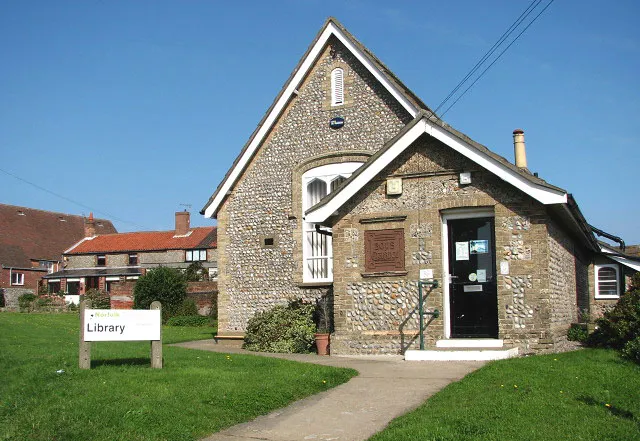
Photo: Evelyn Simak, CC BY-SA 2.0, via Wikimedia Commons
I have photographed people in village halls, on station platforms, in car parks and along high streets. All of those places have their own grammar. But the public library might be the most underrated portrait set in Britain. Not because it looks quaint, and not because I want to make everyone pose with a leather-bound book. Because in 2026 the library is still a working civic room — part reading room, part job club, part warm space, part local noticeboard — and that honesty translates beautifully on camera.
The room tells the truth
A country house says one thing. A converted warehouse says another. A suburban branch library says something much closer to ordinary British life: laminate tables, pinned notices, shelving on castors, a photocopier that has seen things. That is exactly why it works for editorial portraits. Authors, makers, small business owners, charity directors, couples who actually use the place — put them in a library and the picture has context without needing a caption to explain the mood.
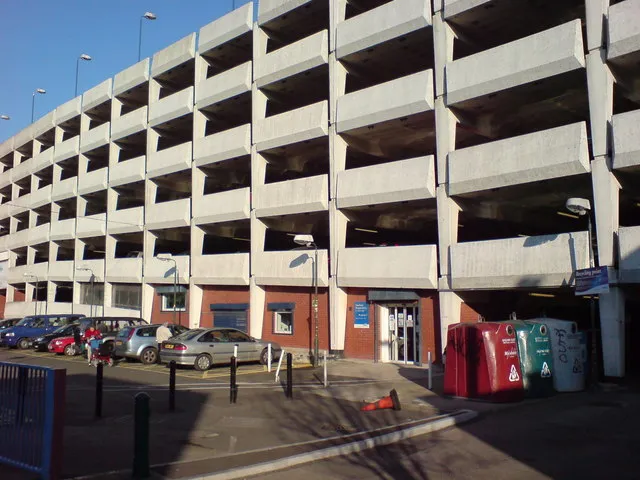
There is also a lovely range of architecture to work with. A brutalist central library gives you concrete, high ceilings and hard geometric light. A quiet branch gives you low shelves, soft corners and the sort of worn-in texture that no studio backdrop can fake. The trick is not to treat either as a heritage set. Avoid the temptation to make it look like a sepia advert for reading. Keep the fire notices, the barcode scanners and the children's section in your line of sight. Those details are the point.
Getting in without being a nuisance
Libraries are public buildings, but they are not free-for-all film sets. Start with the branch manager or the council's communications team. Explain what you are shooting, how many people are coming, how long you need and whether you will be using flash. Have public liability insurance ready. A simple risk assessment helps, especially if you want to work near stairs or move furniture.
Ask when the room is quietest, and then believe the answer. Do not book a session during rhyme time, homework club or the two hours when the computers are fully occupied. Ask before moving chairs or books. Do not use staff as unpaid props, and do not photograph members of the public in the background without consent. If someone wanders into frame, wait, reshoot or crop. A library is one of the few places where people have a reasonable expectation of being left alone.
Permission can take a few weeks. That is normal. Build it into the schedule rather than turning up with a camera bag and a hopeful expression.
Fluorescent light is the house style
Let us be honest about the light. Older libraries often have fluorescent tubes with a greenish cast and a faint flicker. Newer ones may have LED retrofits, which can be cleaner but sometimes mix badly with daylight from the windows. You are rarely working in one neat colour temperature.
Set white balance manually and test a few frames before the subject arrives. Check for banding if you are using silent shutter, and test your shutter speeds under the actual fittings. In the UK's 50Hz mains supply, 1/50 or 1/100 is often a safer starting point than a random fast speed. If the tubes are truly awful, do not fight them to the death. Let the room stay slightly institutional. A little green in the shadows is more truthful than a portrait that looks like it was shot in a softbox.
Work with fast primes — a 35mm and a 50mm will cover most of what you need — and use the windows where you can. Position your subject so the daylight falls across them while the shelves stay in the background. A small white reflector or a sheet of A3 foam board is usually enough. Big flash is possible, but it changes the atmosphere of the room and draws attention. Available light keeps the session calm.
Working in a silent room
A library session has its own etiquette. Pre-agree the poses, use hand signals, and keep your voice low. Silent shutter is useful, but only after you have checked for flicker. Move slowly. Watch the chair legs. Do not block the aisles or stand in the middle of the reference section having a loud creative breakthrough.
Give your subject a task rather than a vague instruction. Ask them to find a book they actually use, open a notebook, sort papers, stand in the aisle where they would naturally browse. An environmental portrait works best when the person looks like they have a reason to be there. Twenty to thirty minutes is plenty. A short, quiet session is kinder to everyone than an hour of rearranging the furniture.
A civic backdrop, not a heritage backdrop
In 2026 libraries are doing a lot more than lending books. Many branches host council services, digital help, coding clubs and community meetings. That makes them a genuinely contemporary backdrop, but it also means you have to be careful. Do not turn other people's daily lives into a mood board. Ask permission, explain the context, and caption the final images accurately. If the story is about the library itself, shoot it with respect rather than pity.
That is the balance I keep coming back to. A library portrait should not say: look at this charming old place. It should say: this is a room that belongs to everyone, and for a few minutes we borrowed the light.
If you are scouting locations for an editorial shoot this winter, put your local branch on the list. Email the manager, pack a prime lens, leave the big flash at home and arrive ready to whisper. The quietest room in town might be the most honest set you have used all year.