The Change Machine Is My Gaffer: Portraits Inside a Seaside Arcade
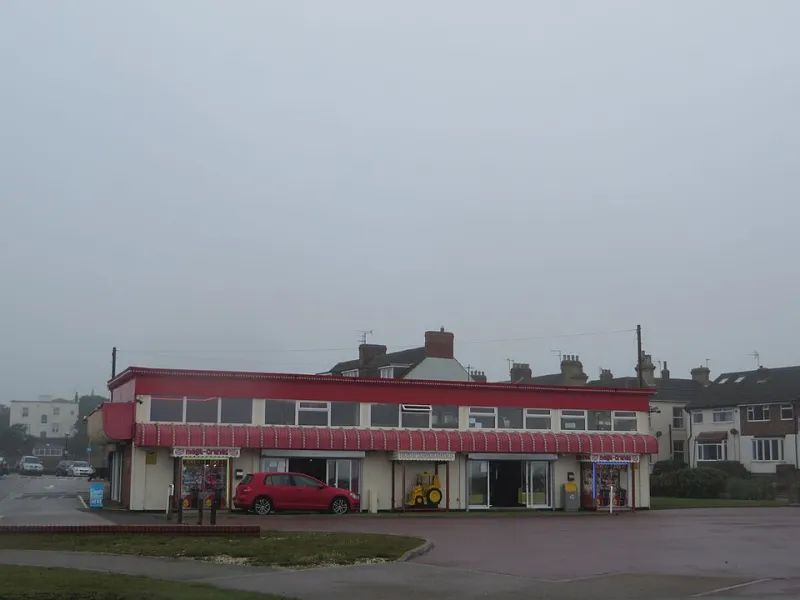
Photo: Graham Robson , CC BY-SA 2.0, via Wikimedia Commons
There's a particular hour in a British seaside arcade, somewhere around half two on a wet February afternoon, when the place belongs to nobody. The penny falls are still running their lights. The grabber machines are lit like tiny cathedrals. Somebody in a tabard is emptying a hopper at the back. Outside, the promenade is doing that grey-on-grey thing, and every window in the building is a softbox you didn't have to pay for.
I've hired studios in cities for a day's shoot and come away with less than I got in forty minutes in an arcade in Great Yarmouth. That's not a romantic claim about nostalgia. It's a practical one about light, texture and the fact that nobody in an amusement hall stands still looking self-conscious.
Why the arcade outguns the studio
A studio gives you one thing well: control. An arcade gives you about nine things badly, and badly turns out to be more interesting. You've got coloured practicals everywhere — magenta off a fruit machine, cyan off a cabinet three rows down, a sickly orange from the change machine's display, plus daylight bleeding through the front glazing. That's four colour temperatures in one frame and none of them agree.
Normally that's a problem. Here it's the material. The trick is not to neutralise it but to decide which source is the hero and let the rest go.
Then there's the wear. Chipped chrome. Lino with a pattern designed to hide footfall and failing. Blown bulbs along the top of a cabinet, so the string runs bright, bright, dead, bright. Couples photograph well against surfaces that are slightly tired, because the picture stops looking like an advert and starts looking like a place.
Getting through the door
Arcades are private businesses, so ask. I've found the approach that works is short, specific and offered at a quiet time: ring or email ahead, say you're a photographer, say it's two people, say you'll be twenty minutes, say you'll buy a round of tokens, and — this matters — say you'll stay out of the aisles and away from the tills.
Small independents are usually fine with it. The chain-owned halls on the bigger piers will often want a manager's sign-off, so give them a week. Never turn up with a tripod and a reflector during half term and expect a warm welcome; you're in the way of the only revenue they've got.
Also: buy something. A tenner in two-pence pieces is the cheapest studio hire in Britain and it makes you a customer rather than a nuisance.
The mixed-light problem
Set white balance to something wrong on purpose. I usually lock around 3800–4200K, which keeps the tungsten-ish practicals warm and lets the daylight through the front windows go cold and blue. That contrast is the whole look. If you white-balance to the daylight, the neon dies. If you balance to the neon, the window goes nuclear.
If you're using flash, gaffer a quarter CTO over it and drag the shutter to pull in the room. Half a second at f/2 with a steady couple leaning on a cabinet will give you neon streaks behind them and a sharp face in front — but you need them braced, so give them something to lean on. That's what the cabinets are for.
Chrome, glass and the change machine
Chrome is the most underrated portrait surface in the country. It gives you a highlight along a jaw, a sliver of colour in an eye, a bit of shape on a shoulder. Find a cabinet that's reflecting a wall of pink and stand your subject at forty-five degrees to it. You'll get a rim light that no assistant could place as fast.
The change machine is my favourite object in the building. It's a lit rectangle at chest height, it throws a clean wash upward, and it hums. Put a face near it and you get a soft underlight that reads as strange and modern rather than flattering — which is exactly what editorial work wants. It's also a great place to park a couple's hands, because people need somewhere to put them.
In season versus out of season
Mid-August, the arcade is a wall of backs and buggies and the only compositions available are tight ones. That's not a disaster — shoot close, use the crowd as blurred colour behind a shoulder, embrace the crush. But you'll be working fast and apologising a lot.
Out of season you get the run of the place: empty aisles, long perspective down a row of cabinets, all that reflected light with nobody in it. It's the better set, and it's also when the staff have time to talk to you, which is worth more than the floor space.
The window does the rest
If it's raining — and it will be — shoot towards the front glazing. Rain-beaded glass in front of a bright, blown-out seafront turns into instant texture, and it softens the background into something closer to paint than photography. Expose for the faces, let the window go. A couple standing at the two-penny pushers with a wet promenade behind them says more about a British seaside wedding than any number of dry, well-lit frames.
Kit, quickly
One body, a 35mm and an 85mm. Something fast — f/1.8 is plenty — because you'll be at ISO 3200 more often than you'd like and the practicals are dimmer than they look on a phone screen. No tripod. Bring a microfibre cloth for the condensations, and a lens pen, because arcade air is salty and greasy in equal measure.
A last note on the couple
Tell them the arcade is loud and a bit ridiculous, and that this is the point. Give them tokens. Let them lose at the grabber. The pictures where someone is genuinely annoyed at a machine are always better than the pictures where someone is posing next to one.
Then take them outside into the drizzle, because the transition — hot colour to cold street — is the ending the set was always heading for.