Chalk, Baize and the Lamp That Does the Work: Portraits in British Snooker Clubs
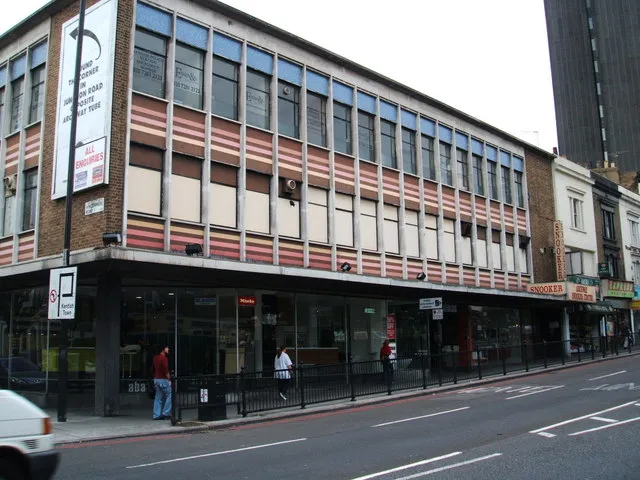
Photo: Chris Whippet, CC BY-SA 2.0, via Wikimedia Commons
Snooker halls are not usually mentioned in the same breath as portrait studios. They smell of chalk and old carpet. The ceiling is low, the lighting is stubborn, and there is every chance a telly is muttering in the corner. But stand at the edge of a table just after the lamps come on and the room changes. The baize goes deep green, the pockets turn black, and each shade throws a tight pool of light across the cloth. It is a proper set, and it has been sitting there for decades.
Why the baize works better than a backdrop
A snooker table gives you what most portable backdrops struggle to fake: scale, texture and a natural edge. The green is saturated but not shouty. The cushions give you somewhere to rest a hand, lean a shoulder or sit without looking like you have been posed. The low lamps carve out a stage without needing a single softbox.
For editorial portraits, the room offers context without turning into a documentary about snooker. You do not need a cue in every frame. A couple leaning over the baize, a solo subject seated on the bench under the scoreboard, a hand resting on the rail while chalk dust catches the lamp — that is enough. The room does the storytelling. You just have to keep the frame clean.
Getting in without causing a fuss
These are members' clubs, not chain pubs with a marketing manager. Ring ahead. Ask for the secretary or the steward, explain what you are shooting, and be honest about crew size, kit and timings. League nights are out. Friday afternoons are often better than weekends. If the club has a quiet period between the lunchtime regulars and the evening rush, that is your window.
Offer something back. A set of prints for the trophy cabinet, a few social media frames for the club, a credit and a copy of the final images go a long way. Check whether the club needs you to carry public liability insurance, and do not assume you can turn up with a trolley of stands. Some halls have narrow doors, steep stairs and no lift. Ask about access before you pack the big cases.
Learn the room's manners
Snooker clubs have their own choreography. Do not move cues without asking. Do not sit on the table. Keep drinks off the baize. Ask before shifting the scoreboard, the triangle or the brush. If a member is practising, give them space and do not fire a flash across their eyeline. A quiet shutter and a small kit will get you further than a loud direction and a lighting rig.
It also helps to arrive looking like you have been in a club before. Say hello. Buy a cup of tea. Put your bag somewhere it will not trip anyone. The best portrait sessions in these rooms feel like a brief interruption, not a takeover.
Working tight and low
The space between tables is often narrower than it looks. A 35mm or 50mm lens is usually enough; an 85mm can be lovely for compressed details but may leave you pinned against a wall. Keep your bag against a table leg, not in the walkway. Watch the overhead lamps — they are lower than you think, and so are the shades.
Use the table as furniture. Sit a couple on opposite corners. Have one person chalk a cue while the other watches. Ask a solo subject to lean on the rail and look towards the lamp, not into it. The baize gives you a natural foreground, and the dark surround keeps the frame from feeling busy. If you need a wider shot, include the scoreboard or the rack of cues, but do not let the room swallow the face.
The lamp is the key light
That low-hanging shade above the table is one of the UK's most underrated portrait lights. It is a top light, so it will carve cheekbones and leave the eyes a little shadowed. Get your subject to tilt their head up slightly, or sit them back so the light falls across the forehead and nose rather than straight down. Expose for the face and let the corners of the room fall away. The fall-off is the point.
The overhead fluorescents are the awkward part. They are often a different colour temperature from the table lamps, and they flatten everything they touch. Do not fight them completely. Set a custom white balance, or choose the warmer look and let the tubes read as a cool edge. If the club is happy for you to switch off a bank of lights, do it, but ask first. Otherwise, use the fluorescents as fill and let the table lamp do the shaping.
A fast prime and ISO 1600 to 3200 will usually get you there. A small reflector can lift the shadow under the eyes, but keep it subtle. If you are shooting a couple, position them so the lamp falls between them rather than directly over one face. A slight turn of the shade can help, but never move it without permission.
Keep the props honest
A cue can look awkward in untrained hands. Use it sparingly. Chalk is better. A cube of chalk on the rail, a dusting on a fingertip, a hand resting on the cushion — these are small gestures that feel native to the room. The scoreboard is useful for a wider editorial frame, but check that the numbers are not distracting. The same goes for trophies and notices: one piece of context is enough.
The quiet exit
Leave the room as you found it. Put the scoreboard back, return the cues, wipe the table if you have been leaning on it, and thank the steward. Send the prints you promised. Snooker halls are closing, and the ones that remain are run by people who care about them. Treat the room well and you will be welcome back. Treat it like a studio and you will be another photographer who did not get it.
The best frames from these halls rarely look staged. They look like someone paused in a room that has been waiting years for a portrait.