Awnings, Aisles and Available Light: Shooting Portraits Under a Market Roof
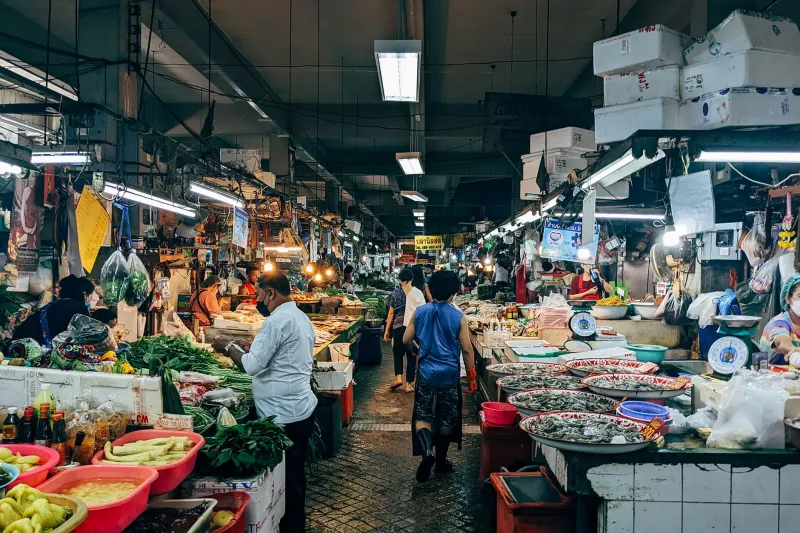
Every photographer has a mental list of locations they keep coming back to. Mine is short, and it's almost entirely made up of buildings with a roof, a smell, and someone shouting a price. Covered markets sit near the top. Not because they're fashionable — most of them have been quietly doing their job since the Victorians — but because they hand you, for free, the three things a portrait set actually needs: depth, colour and weather cover.
I've shot in market halls from Halifax to Cardiff and the experience is never identical, but the rhythm is. Here's what I've learned, mostly by getting it slightly wrong first.
Why the roof changes everything
Outdoor locations are hostage to the sky. A covered market is a room with a city inside it, and a room can be worked with. You get consistent ambient light from glazed roofs or strip lighting, which means you can stop chasing the weather and start thinking about composition.
You also get the thing editorial portraits are always short of: layers. A couple framed against a fruit stall has, behind them, three more stalls, a mezzanine, a hanging sign and a bloke in a tabard moving a pallet. That's not clutter, that's a set. Shallow depth of field turns it into colour and suggestion; a wider aperture and a longer lens turns it into a proper environment portrait.
And crucially, markets are civic. They're not styled for photographs. There's an honesty to a stone floor that's been wet since 7am that a hired studio can't fake.
Picking your building
The best market for portraits is rarely the most famous one. Big destination markets — you know the ones — are wonderful to look at and miserable to shoot in on a Saturday, because you're competing with 4,000 people and a queue for a cheese toastie.
Look instead at the provincial survivors: Halifax Borough Market with its buttercross of a ceiling, the Grainger Market in Newcastle, Cardiff Central Market, Leicester, Doncaster, St Nicholas in Bristol on a weekday morning. These places have width, high ceilings, and enough quiet corners that you're not constantly apologising to someone.
Two things to check before you commit. First, whether the market office wants a conversation — many do, and it's a five-minute phone call that saves you being asked to leave. Some council-run markets have a small commercial filming fee; others just want to know your name and your insurance. Second, whether the day you're planning is a full trading day or a quiet one. A Tuesday in February and a Saturday in December are effectively two different buildings.
Timing: the market has two personalities
Arrive early. Not at opening, before it. There's a twenty-minute window when traders are still setting out — crates stacked, awnings half-rolled, no customers — and it's the most photogenic the building will be all day. It's also the least convenient moment to interrupt anyone, so use it for wide shots and backgrounds, not for chats.
Then leave, get a coffee, and come back mid-morning when the place has warmed up. Traders have found their rhythm, the light has come up through the roof, and people are relaxed enough to say yes when you ask.
Avoid the last hour. Shutters come down, the floors get swept, and everyone is tired. You'll get the shots, but you'll feel like a nuisance, and that's a bad way to end a shoot.
Working the aisles respectfully
A few things that have kept me welcome:
- Ask the trader, not just the market. Even with permission from the office, the stall in your background belongs to someone. A quick "mind if we stand here two minutes?" costs nothing and often ends with them suggesting a better spot.
- Never block an aisle. Tripods are the enemy here. If you must use one, keep it tight to a stall edge, and be ready to lift it at any second.
- Wet floors are a gift and a hazard. That sheen reflecting the stall lights is half the reason to be there. It's also where your subject will slip. Warn them, and walk the route first.
- Don't shoot customers. Or if you do, do it so they're not identifiable, or ask. Market regulars are not your extras.
- Buy something. Genuinely. It's their workplace and you're taking up space in it.
Light, colour and the flaws that pay
Most covered markets give you a mix of daylight from above and tungsten or LED from the stalls, and that mix is not a problem to correct — it's the look. Lean into it. Let the fluorescent green of a fruit display sit against warm bulb light and don't neutralise the lot in post. Editorial work lives on that kind of colour clash.
Practically, I'm usually at ISO 800–1600, wide open, and metering for the face while letting the background fall where it wants. Roof glazing makes beautiful soft top light in the middle of the hall; the edges are darker and moodier and better for close portraits. Learn the geography of the light before you start posing.
Kit, briefly
One body, a 35mm and an 85mm, and nothing else. The 35mm does the environment portraits and the aisle wides; the 85mm compresses the layers and lets you work from across a walkway without standing in anyone's way. A small LED panel is useful in the deeper corners but flag it or the shots start to look like telly.
Couples and editorial in the same room
For couples, markets are unexpectedly good. They give nervous people something to do — buy a coffee, pick a pastry, argue about a plant — and movement hides stiffness better than any pose. I'll often walk a couple through the hall and shoot them walking away, then turn them into a gap between stalls where the light falls cleanly.
For editorial, the market does the storytelling for you. A portrait of a maker or a small business owner taken at their own stall, with the building visible around them, says more than the same person against a grey wall. That's the whole argument, really: places that are actually used make better pictures than places that are merely available.
The short version
Ring the market office. Turn up before opening. Come back at ten. Ask the traders. Keep your bag off the floor. Let the colours clash. Shoot the wet stone. And buy a bag of apples on the way out.